October is Fire Prevention Month, and Fire Prevention Week runs October 4 to 10 this year. Most fire safety advice focuses on cooking and candles, but electrical fire prevention belongs on the same checklist. Problems in old wiring, worn outlets and overloaded circuits usually start out of sight and give small warnings first. This guide covers the warning signs to watch for, how to check your smoke alarms, and what an electrical safety inspection looks at in an Albany or Schenectady home.
Warning signs of an electrical fire hazard
Some electrical problems are obvious. Others build up inside a wall or a panel where you can’t see them. Pay attention to:
- Breakers that trip again and again
- Lights that flicker or dim when an appliance turns on
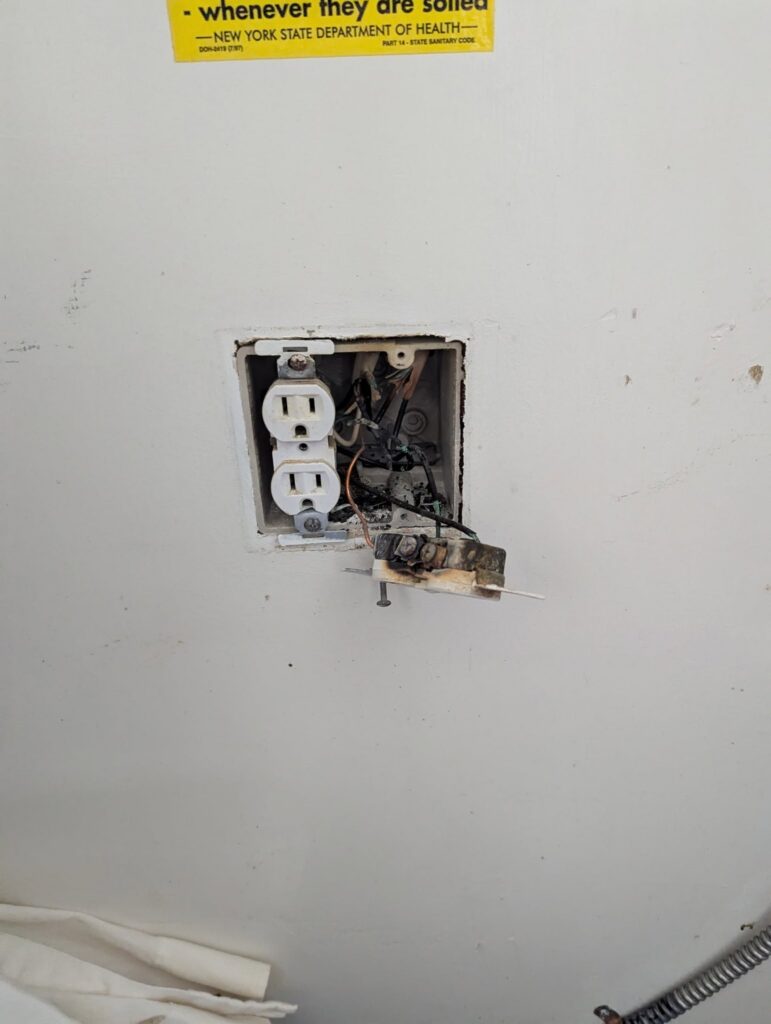
- Outlets or switches that feel warm or look discolored
- Buzzing, crackling or sizzling sounds from an outlet, switch or panel
- A burning or hot-plastic smell you can’t trace
- Loose outlets or switches
- Extension cords doing the job of permanent wiring
- Too many devices on one outlet or power strip
- Cords or wiring that are frayed, exposed or cracked
Any one of these is worth a call. A burning smell, smoke or sparks is more urgent: stop using that outlet or device right away. If you see smoke or flames, get everyone outside and call 911 first.
Check the age of your smoke and carbon monoxide alarms
Fire Prevention Month is a good reminder to look at the alarms that wake your family up. The National Fire Protection Association says a smoke alarm should be replaced 10 years after the manufacture date printed on the back, not the date you bought it or installed it. Test each one monthly, and replace the battery in any alarm that uses a standard one at least once a year. NFPA research also finds the risk of dying in a home fire is roughly 60 percent lower when working smoke alarms are present.
Combination smoke and carbon monoxide alarms often have a shorter life, so follow the end-of-life signal and the label. If your home still has older battery-only alarms, ask whether hardwired alarms with battery backup make sense for your house. The U.S. Fire Administration has a plain guide to the different types.
Charge safely: this year’s Fire Prevention Week theme
NFPA’s theme for 2026 is “Charge Into Fire Safety: Safe Charging Is a Superpower.” It focuses on the lithium-ion batteries in phones, laptops, power tools, e-bikes and scooters, and it fits an electrician’s world more than you might expect. A few habits from that campaign are worth adopting now:
- Use the charger and cable that came with the device, or a proper replacement from the maker
- Charge on a hard surface, not on a bed, couch or pile of laundry
- Stop using any battery that gets hot, swells or smells odd
- Plug chargers directly into a wall outlet instead of a chain of extension cords
If your garage or basement charging spot trips a breaker or depends on extension cords, that’s a sign the circuit wasn’t sized for the job. That’s a good time to have it looked at, whether you charge e-bikes and power tools or you’re planning to add an EV charger. See our electrical services for what we install.
What an electrical panel inspection checks
Your electrical panel sends power to every circuit in the house. As you add appliances, electronics, an EV charger or new heating equipment, the demand on that panel changes. A panel inspection looks for loose connections, signs of overheating, corrosion, breakers that don’t match the circuit, and equipment that has simply aged out.
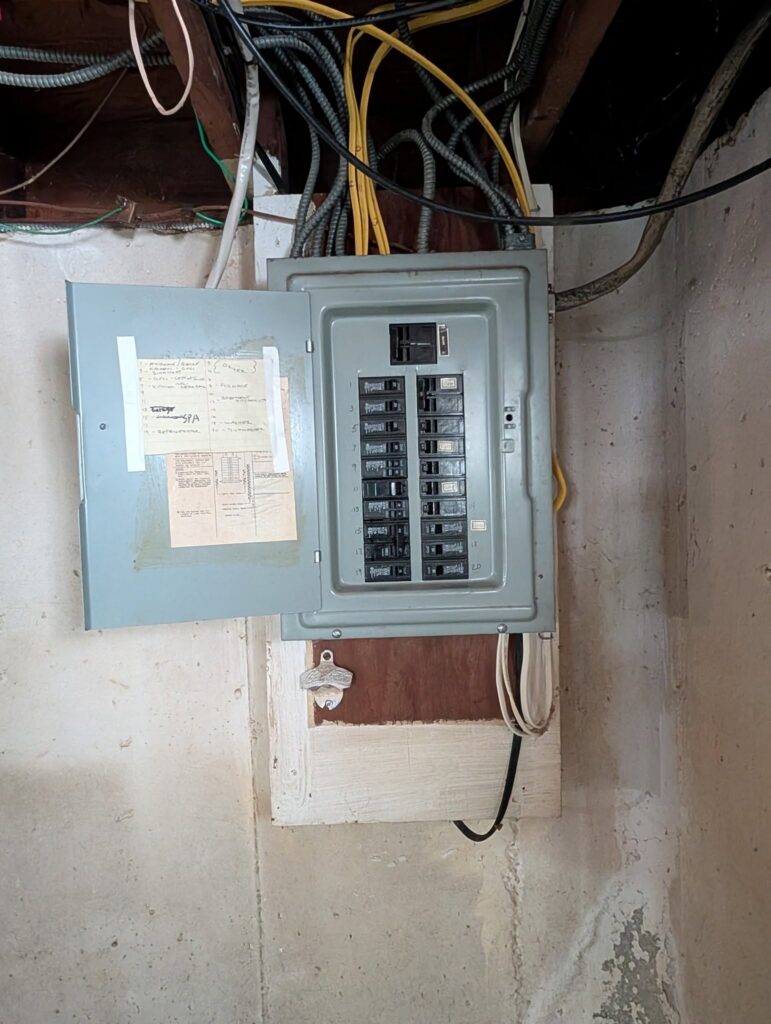
Some older panel brands, including Federal Pacific, are among the ones many electricians recommend replacing. If you don’t know the age or brand of your panel, October is a good time to find out. And if a panel does need to be replaced, New York’s current code adds requirements that changed the price of the job. Here’s what changed and why.
Avoid overloading outlets and circuits this fall
As the weather turns, more of the household load moves indoors. Space heaters, seasonal decorations and extra lighting all add demand, and older circuits weren’t built for it. Plug space heaters directly into a wall outlet, not a power strip, and don’t count on extension cords as a permanent fix. If you keep running out of outlets or tripping breakers, the fix is usually more outlets or a circuit upgrade, not another power strip.
What an electrical safety inspection with Colonial Electric looks like
A technician spends about an hour looking at the problem you called about and the rest of the home, like a checkup at the doctor. We flag what we find red, yellow or green, from fix now to can wait, and go over it with you in plain language. Nothing gets done until you’ve seen a written price, and that price is guaranteed.
Common questions about electrical fire safety
Is it normal for an outlet to feel warm?
A slightly warm cover plate on an outlet that powers something heavy can happen. An outlet that feels hot, looks discolored or smells like burning is not normal. Stop using it and have it checked.
How do I know if my breaker keeps tripping for a reason?
A breaker that trips is doing its job. If it trips once after you run a hair dryer and a space heater together, you may have simply asked one circuit to do too much. If it trips repeatedly, or won’t reset, don’t keep forcing it. Something is wrong on that circuit.
How often should I replace my smoke alarms?
NFPA says every 10 years from the manufacture date on the back of the alarm, or sooner if it fails a test. Check the label on each one.
Can an old electrical panel cause a fire?
Age alone doesn’t mean a panel is unsafe, but loose connections, overheating and outdated parts are what an inspection looks for. If you don’t know how old yours is, that’s worth finding out.
Schedule an electrical safety inspection in Albany or Schenectady
If you’ve noticed flickering lights, tripping breakers, warm outlets or an older panel, we can take a look. Colonial Electric serves homeowners throughout Albany, Schenectady and the surrounding Capital Region. Call (518) 949-9716 or send us a message.
Last reviewed: September 2026. This is general safety information, not a substitute for an evaluation of your home. Smoke alarm guidance is from NFPA and the U.S. Fire Administration. Fire Prevention Week details are from fpw.org. Confirm requirements with your municipality’s building department, since local rules vary.