
Panel Upgrades, Quoted Before We Start
A panel upgrade is the biggest electrical job most homeowners ever buy, and since December 31, 2025 it is a different job than it used to be. Here is what it includes now, what the code requires, and how we price it.
You get a firm price before we start. The number on your proposal is the number on your invoice.
When a panel actually needs replacing
Most people do not think about the panel until something forces them to. The usual reasons we replace one:
- The house is asking for more than the service can give. An EV charger, a hot tub, a pool, a garage, or a switch from gas to electric appliances. Sometimes that means a bigger service. Sometimes it does not, and we will tell you which.
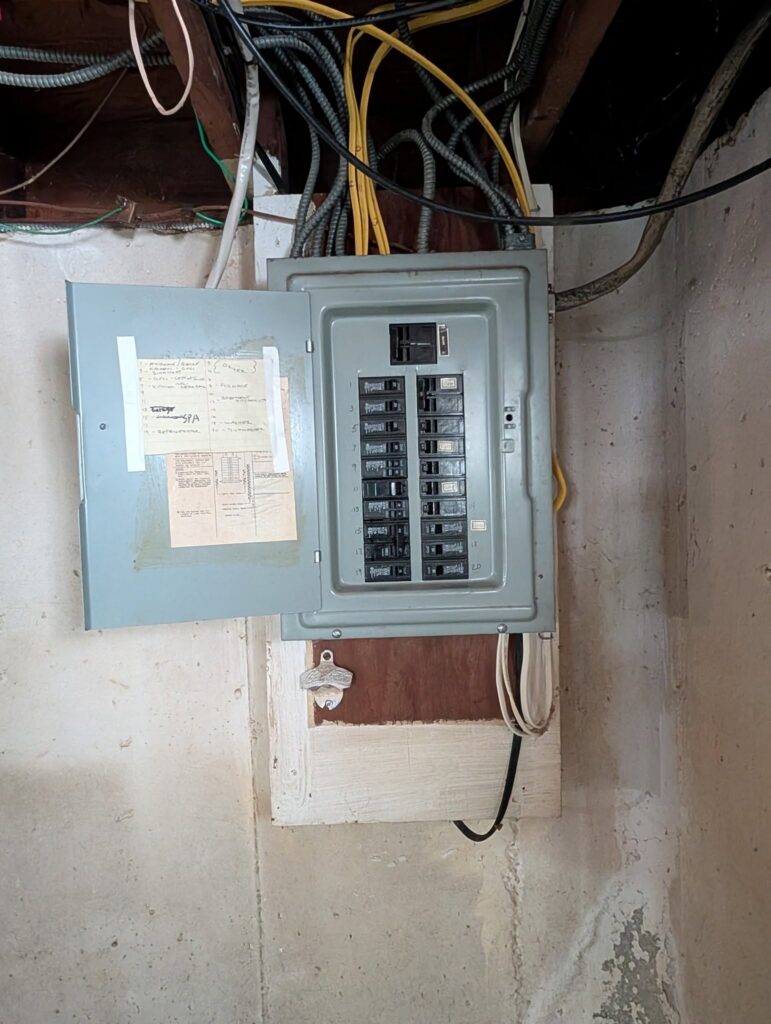
- Old, crusty wiring. As Larry puts it, when you buy a house you do not open a box and look at the wiring. You look at the panel and think, that looks old. Albany and Schenectady are full of houses like that, and it is most of what we do there.
- Knob and tube. Unprotected conductors with no ground path. Many insurers will not write or renew a policy with active knob and tube in the house, and replacing it usually means a new panel too.
- Damage. A corroded meter socket, a melted breaker, a panel brand that has been recalled, or a service that failed in a January freeze.
A breaker that trips over and over is not on this list on its own. That breaker is doing its job. The question is what is on the circuit, and that is a troubleshooting call, not a panel sale.
What the 2023 code adds to every panel upgrade
New York moved from the 2017 electrical code to the 2023 edition on December 31, 2025, skipping a whole cycle. Three things now come with a panel upgrade that did not before:
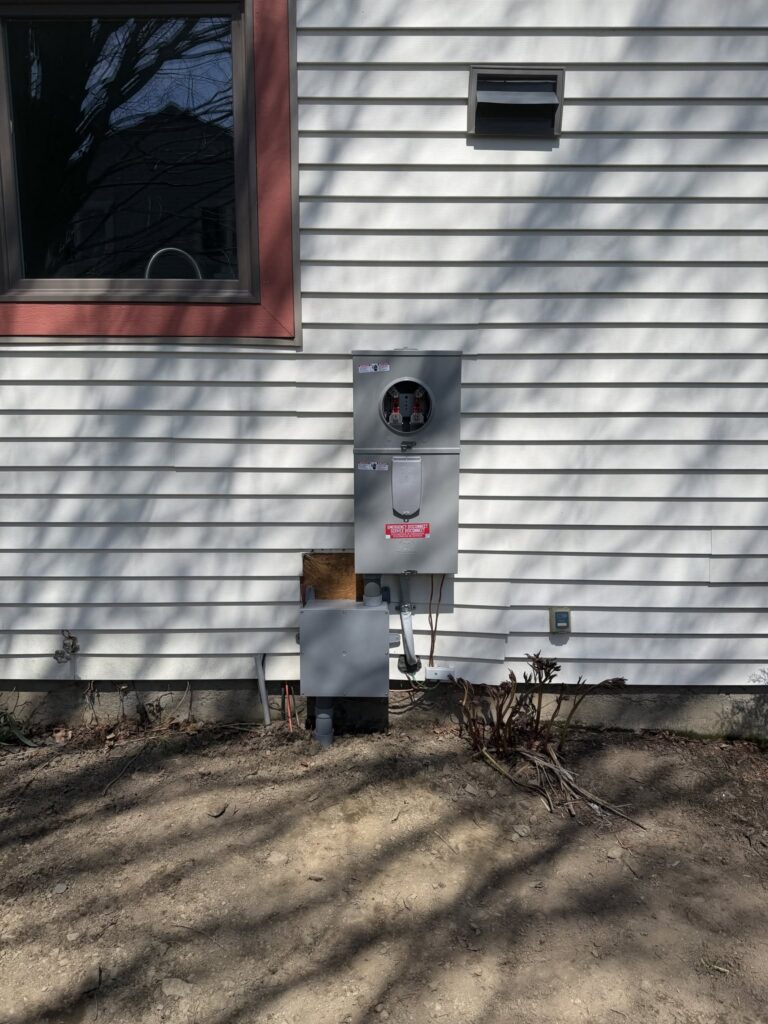
- An outdoor emergency disconnect. A switch outside the house, near the meter, that lets a firefighter cut power without going inside. Larry’s crew calls it the fireman switch.
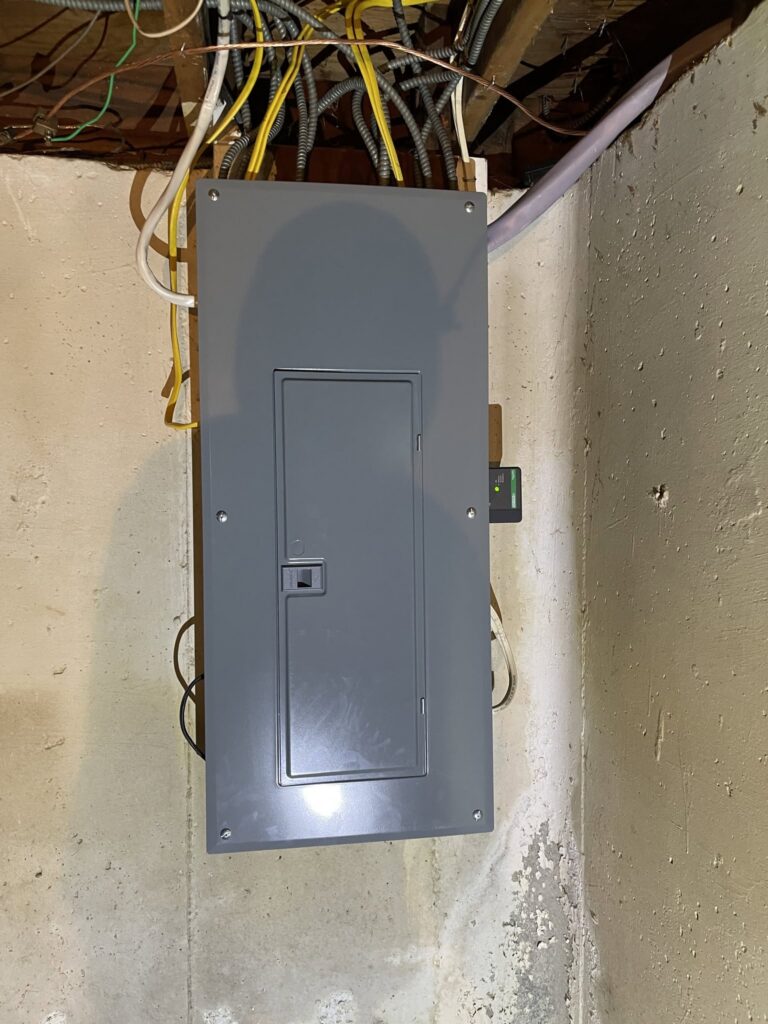
- Whole-home surge protection. A surge protective device at the service. It only works as well as the grounding it is tied to, so updated grounding is part of the job, not an extra.
- Arc-fault protection on circuits we extend or rework. If the new panel is larger or moves and the existing wires no longer reach, those circuits get extended, and extended circuits get arc-fault breakers. We show you which ones on the proposal.
None of that was on your neighbor’s 2024 invoice. Here is the full explanation, with the code sections.
Do you need 200 amps?
Not always. A lot of customers assume an EV charger or a new hot tub means a 200 amp service. What decides it is a load calculation: what is in the house now, what you are adding, and what the existing service can carry. We run that calculation and show you the result. If 100 amps is enough, we say so. Selling a service you do not need is not how we want to do business.
Permits, inspections and the two-week wait
A new service is permit work everywhere we operate. In the City of Albany the permit and inspection run about two weeks, and we do not start a new service until the permit is in hand. An inspector who does not work for us signs off before the job is closed, and we do not take final payment until then.
If your current service has failed and you have no power, that is different: we get you working the same visit and run the permit behind it.
Who has to be licensed and who inspects changes at every city line. Here is the city-by-city guide.
What it costs, and why the number does not move
Your exact number comes from our printed pricing guide, the same guide for every customer, and it is written on the proposal before we get the tools out.
If we open the wall and find we need heavier wire than we planned for, that is our estimating mistake, not a change order. The price on the proposal stays the price. The two honest exceptions are a second, separate fault we could not see until the first repair was made, and work you add to the list once we are there.
Every proposal comes in three tiers: the must, the should, and the could, priced separately so you can see exactly what you are agreeing to. Here is how the pricing promise works.
Safety & Savings Plan members get exclusive discounts on certain products and services.
Panel questions we hear most
What is an electrical panel?
The gray metal box, usually in the basement or garage, where power comes into your house and gets split into circuits. Think of it as the main water valve and the manifold in one box: power comes in from the street, and each breaker is the shutoff for one line, to the kitchen, the bedrooms, the dryer. Older homes have a fuse box that does the same job.
How do I know if my panel needs to be replaced?
Common signs: breakers that trip often, a fuse box instead of breakers, no room for new circuits, scorch marks or a burning smell, or a Federal Pacific or Zinsco label, two brands many electricians recommend replacing. A new panel is also the usual first step for an EV charger, a hot tub or an addition. We check it on an evaluation and tell you either way.
What is the difference between amps, volts and watts, and why does it matter for my house?
Picture a garden hose. Volts are the water pressure, amps are how much water is flowing, and watts are the work the water does, like spinning a sprinkler. Volts times amps equals watts. Your house gets 120 and 240 volts from the utility, so the pressure is fixed. Your panel is rated in amps, usually 100 or 200, and that is the size of your main pipe. Everything you plug in uses watts. Run too much at once and you are asking a small pipe to carry more than it can, so the breaker shuts it off before the wire overheats. A panel upgrade is a bigger main pipe: more amps, same pressure.
Do you handle the permit and inspection?
Yes. We pull the permit, schedule the inspection, and do not take final payment until the inspector signs off. What the current code adds to a panel job.
What is knob and tube wiring, and does a new panel fix it?
The original wiring in many Capital Region homes built before about 1950: single wires held off the wood by ceramic knobs and tubes, with no ground wire. Think of an 80-year-old garden hose. It did its job for the house it was built for, but the covering is brittle now and it was never made for what we run today. A new panel does not make it safe; the old wiring itself has to be replaced. If you are buying or selling an older home, ask about it early, because many insurers ask about it too.
Get the number before the tools come out.
One call. A real quote from the printed guide, the code items shown line by line, and an inspector’s signature before we close.