
If you got a quote for a panel upgrade this year and it landed higher than what your neighbor paid for the same job in 2024, you are not imagining it, and nobody is padding the number. The job itself changed on December 31, 2025. Here is exactly what changed, where it is written, and what you are getting for the difference.
New York skipped an entire code cycle
New York adopts the National Electrical Code through the state’s Uniform Code. The 2025 Uniform Code took effect on December 31, 2025, and it references the 2023 edition of the NEC. The code it replaced, the 2020 Uniform Code, referenced the 2017 NEC.
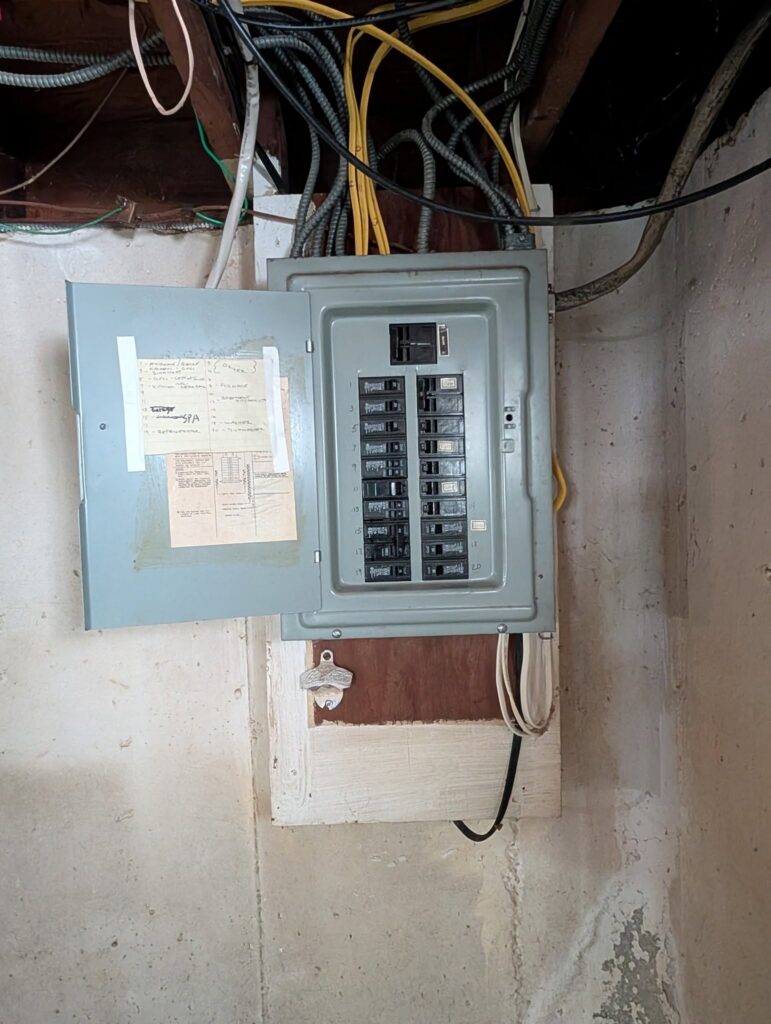
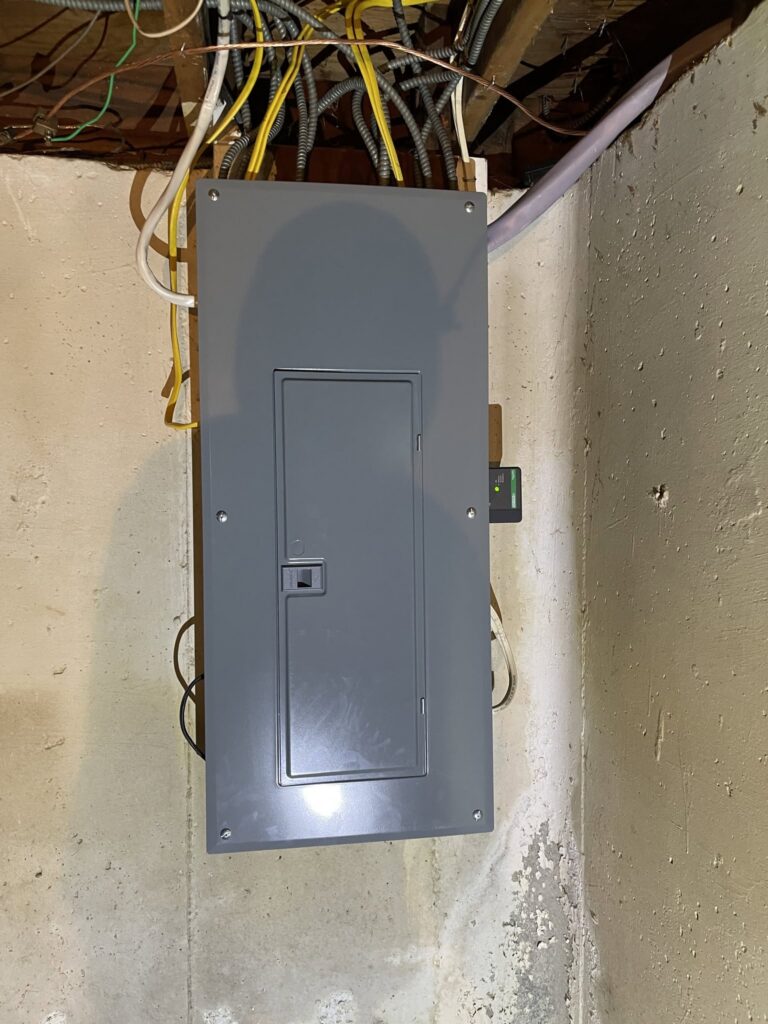
New York never adopted the 2020 NEC. So on one day, every newly permitted electrical job in the state moved from 2017 rules to 2023 rules. Six years of code changes, absorbed in a single step. A panel upgrade is the job where most of those changes show up at once, because several of the new requirements are triggered specifically by replacing service equipment.
One detail worth knowing: the new code applies to work permitted on or after that date. If your permit was pulled before December 31, 2025, that job is still governed by the old code, which is why two neighbors can get two different scopes for what looks like the same job.
Change one: the outdoor emergency disconnect
Under NEC 230.85, the service to a one- or two-family home needs an emergency disconnect in a readily accessible outdoor location, so that a firefighter can cut power to the house without going inside. The 2023 edition, in 230.85(C), says that where service equipment is replaced, all of the requirements of the section apply. A panel upgrade replaces service equipment, so the outdoor disconnect comes with it.
What that looks like on your house: a labeled disconnect outside, near the meter, marked EMERGENCY DISCONNECT. We call it the fireman switch. It is hardware, it is labor, and it is an inspected item, which is part of why the quote moved.
Change two: whole-home surge protection
NEC 230.67 requires a surge protective device at the service for dwelling units, and it has the same trigger: where service equipment is replaced, the requirement applies. The device has to be Type 1 or Type 2, installed in or immediately next to the service equipment, and under the 2023 edition it needs a nominal discharge current rating of at least 10kA.
Surge protection was introduced in the 2020 NEC. That is the edition New York skipped, which is why so many Capital Region homeowners are hearing about it for the first time on a 2026 quote. The short version of what it does: it clamps the voltage spikes that come in from the utility side before they reach your electronics, and it only works as well as the grounding it is tied to.
The arc-fault question, answered carefully
This is the one where you will hear different answers from different electricians, so here is the actual rule. NEC 210.12(D) requires arc-fault protection where an existing branch circuit is modified, replaced, or extended, with an exception for extensions of six feet or less that add no outlets or devices. A straight panel swap, with every existing circuit landing back exactly where it was, does not by itself require AFCI breakers on every circuit.
In practice, a panel upgrade often is not a straight swap. If the panel moves, or the new panel is larger and the existing wires no longer reach, circuits get extended, and once an extension passes six feet the arc-fault requirement applies to that circuit. Local inspectors also read the rule, and some read it more strictly than the bare text. So the honest answer is that which circuits need AFCI depends on what actually has to be done to your wiring, and we show you that circuit by circuit on the proposal rather than telling you code requires all of them.
What you are actually getting
- A service a firefighter can shut off from outside.
- A surge protector rated for the whole house, at the point where the utility feed comes in.
- Arc-fault protection on any circuit that had to be extended or reworked.
- A permit, and an inspection by someone who does not work for us, before the job is closed.
None of that was on your neighbor’s 2024 invoice, because none of it was required in 2024.
What it costs, and how we quote it
National cost guides put most panel upgrades from 100 to 200 amps between $1,300 and $3,000 (This Old House, 2026). Those are national averages that do not reflect everything New York now requires on a panel swap, so a Capital Region quote will usually land above that range.
We price every panel upgrade in writing before we start. The number on your proposal is the number on your invoice. If we open the wall and find heavier wire is needed, that is our estimating mistake and we absorb it. The proposal is broken into must, should and could, so you can see the code-required items separately from the things you might want done while the panel is open.
What to ask any electrician quoting you a panel
- Is a permit being pulled, and who is pulling it?
- Is the outdoor emergency disconnect included in this price?
- Is the surge protective device included, and is it Type 1 or Type 2?
- Which circuits are getting arc-fault breakers, and what is driving that?
- Is this number guaranteed, or is it an estimate?
If the answers are vague, get a second quote. If you want the longer version of how to check any electrician’s credentials, including ours, start here. And if you are not sure which city’s rules apply to your house, licensing in the Capital Region changes at every city line.
Last reviewed: September 2026. Code references are to the 2023 NEC as adopted by the 2025 New York State Uniform Code. Confirm requirements with your municipality’s building department, since local interpretation varies.