It’s a cold night, the space heater is running, and the bedroom goes dark. You flip the breaker back on, and twenty minutes later it trips again. “Why does my breaker keep tripping?” is one of the most common troubleshooting calls we get. Here’s what the breaker is telling you, what you can safely check, and when it’s time to call us.
The breaker is usually doing its job
Most people who call us think the breaker is broken. They reset it, it trips, they reset it again. Most of the time the breaker is fine. It’s doing exactly what it was built to do.
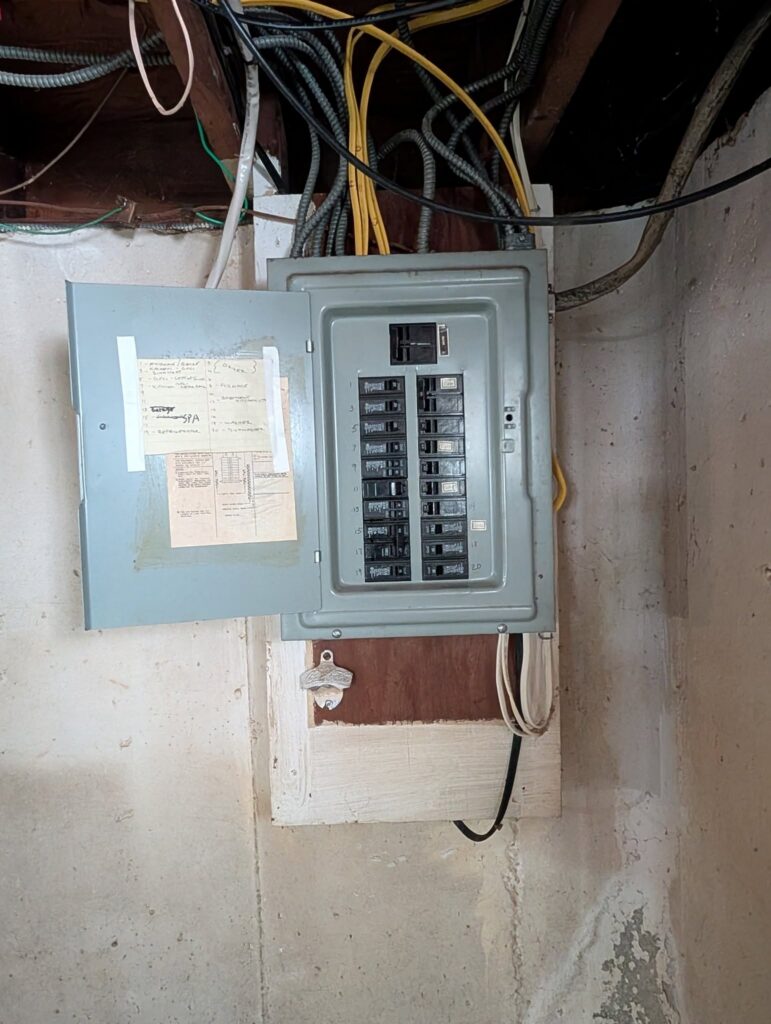
Think of a breaker as a smoke alarm for the wiring inside your walls. When more electricity runs through a wire than it can safely carry, the wire heats up. The breaker shuts the circuit off before the wire gets hot enough to be a problem. The trip isn’t the problem. It’s the warning.
That’s why one trip is rarely a big deal, and repeated trips are. The Electrical Safety Foundation International says frequent trips “indicate a problem and should be inspected by a qualified electrician.”
What makes a breaker trip
- Too much on one circuit. Every circuit is built to carry a certain amount. Run a space heater, a hair dryer and a vacuum on the same one and you can go past it. That’s an overload, and a breaker that trips often is one of the first signs of it, according to ESFI.
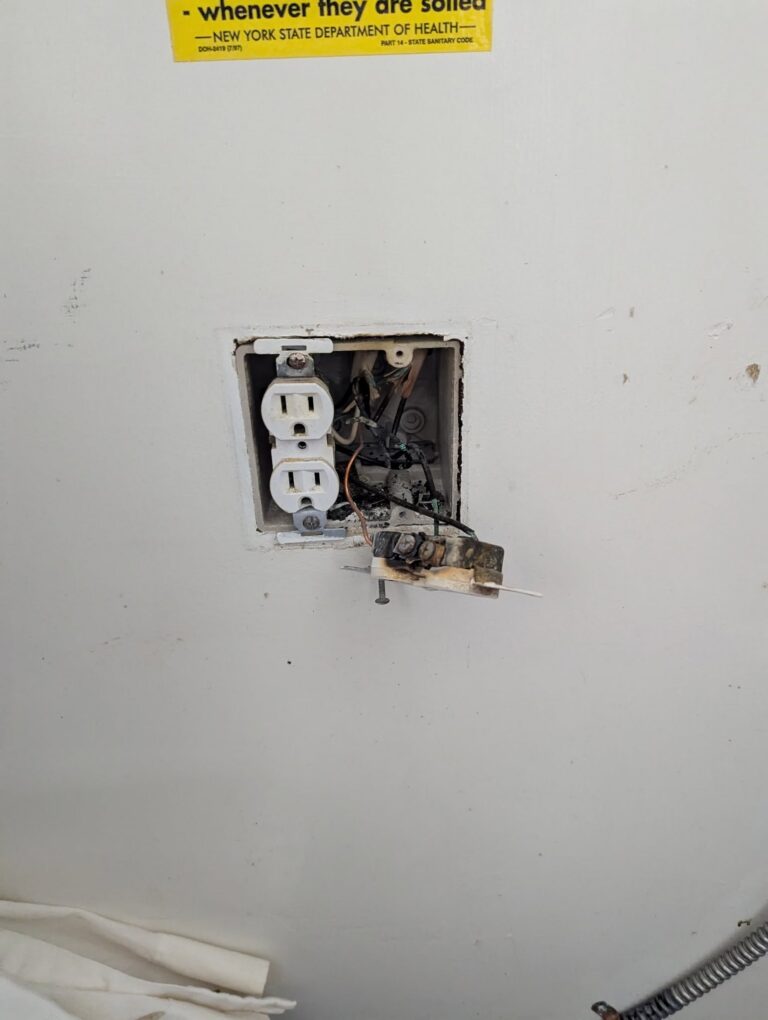
- A short circuit. Two wires that should never touch, touch, and the breaker shuts off right away. Larry, our owner, had one in his own kitchen. He plugged in his meat grinder and it popped and sparked on the counter. The cord had cracked where it meets the grinder, the two wires inside touched, and the breaker tripped. The breaker did its job. The meat grinder was done. If a cord is frayed or cracked, stop using it, because touching the damaged spot can shock you. We also find shorts left behind by earlier wiring projects, like a bare ground wire hooked to the hot wire. The breaker won’t hold until that’s fixed.
- A ground fault. Electricity takes a path it shouldn’t, often through water or a damp spot. GFCI protection trips when it senses that, which is why bathroom, kitchen, garage and outdoor outlets are often protected by it. Some GFCIs are breakers in the panel. Others are an outlet with a reset button on its face, and one of those can protect several outlets down the line.
- An arc fault. Many newer panels also have arc-fault breakers (AFCI). They watch for sparking between wires, the kind a damaged cable or a loose connection can cause, and shut the circuit off when they detect it.
Why it starts when the heat comes on
A breaker that stayed quiet all summer can start tripping in November. Space heaters, electric blankets and holiday lights come out at the same time, often in older rooms with only one or two outlets.
Space heaters are the big one. Many plug-in heaters use 1,500 watts on their high setting. At 120 volts, that’s 12.5 amps (1,500 ÷ 120). Many bedroom circuits are 15 amps, and one circuit often feeds outlets in more than one room. So one heater can use most of a circuit before the lamp, the TV or the phone charger are counted. ESFI recommends plugging only one heat-producing appliance into an outlet at a time.
Space heaters and extension cords don’t mix
Here’s something we find on evaluations that homeowners often don’t realize is a problem: a space heater running off an extension cord because the room doesn’t have enough outlets. A heater’s own cord is built to carry the heater’s load. A light-duty extension cord can have thinner wire. Put the heater’s load on thinner wire and the cord can heat up, and that’s where fires can start.
The U.S. Consumer Product Safety Commission is direct about it: never power a heater with an extension cord or power strip. National Grid, which supplies power to much of the Capital Region, gives the same advice: plug space heaters straight into a wall outlet and keep them at least three feet from anything that can burn. And turn the heater off when you leave the room.
A power strip doesn’t solve it either. It adds outlets, not power. ESFI says leaning on extension cords is a sign you don’t have enough outlets, and the real fix is more outlets or a new circuit.
What you can safely check
- Unplug things in the room that lost power, especially anything that heats: space heaters, hair dryers, toasters, irons.
- Reset the breaker once. A tripped breaker usually sits between on and off. Push it fully to off, then back to on.
- Plug things back in one at a time. If it trips when one thing goes back in, you’ve found what’s pushing that circuit over. Run less on it at once.
- Never hold a breaker on, tape it or put in a bigger one. The breaker is sized to protect the wire in your wall, not whatever you plug in. A bigger breaker lets that wire run hotter than it was built for. It’s like taping over a smoke alarm because it keeps going off.
- Leave the covers on. Flipping the breaker is as far as a homeowner should go. Don’t take off the panel’s inner cover or anything else held on with screws.
Leave it off and call us if
- It trips again right away, even with nothing plugged in
- It won’t reset at all
- The breaker, the panel or an outlet feels warm, looks scorched or buzzes
- You smell something burning
- It keeps tripping even after you’ve spread things out
Here’s what we tell people who call with this: unplug the device, don’t use it, find the breaker, put it in the off position and leave it there until we arrive.
If you see smoke or flames, don’t troubleshoot. Get everyone out and call 911 from outside.
What we do when we come out
We find out why it’s tripping, not just how to make it stop. We fix what you called about, then look at the rest of the system for what caused it: the panel, the wiring, the other outlets on that circuit. You get a red, yellow or green rating on what we find and a written report, and your options come as musts, shoulds and coulds.
If the circuit is simply being asked to carry too much, the fix is usually more outlets or a new circuit. If the panel itself is the problem, that’s a panel upgrade, and we’ll tell you so. Before any work starts, you get a firm written price. For more ways to keep a circuit from overheating, see our electrical fire prevention tips.
We work in homes across the Capital Region. See what we do as a residential electrician in Albany, or call (518) 949-9716 during business hours.
Common questions
Is it dangerous if my breaker keeps tripping? The trip itself is the safety system working. The danger is in ignoring it: resetting it over and over, holding it on or swapping in a bigger breaker. If it trips more than once, have it checked.
Can a breaker go bad? It can, but it’s less common than people think. Most of the time the breaker is fine and something on the circuit is wrong. We check the circuit before we replace a breaker.
Why does my breaker trip with nothing plugged in? That usually points to the wiring itself, like a short or a damaged cable, rather than too much plugged in. Leave it off and call us.
Can I use a heavy-duty extension cord for my space heater? The CPSC says not to power a heater with any extension cord or power strip. Plug it straight into a wall outlet. If there isn’t one where you need the heat, that’s worth fixing.
Last reviewed: November 2026. This is general safety information, not a substitute for an evaluation of your home. Breaker and overload guidance is from the Electrical Safety Foundation International. Space heater guidance is from the U.S. Consumer Product Safety Commission and National Grid.